
Main Sequence Beginner Guide: Your First Station
A step-by-step opening for Main Sequence: scan your belt, refine ore, build a powered station, and unlock research without wasting materials.
Main Sequence starts you in a small mining ship with a scanner, a mining laser, and just enough cargo space to matter. The first hour is not a tutorial about combat or exploration. It is a logistics problem: turn loose asteroid ore into plates, turn plates into a station, and turn that station into a place that can build the next thing without you.
This opening route is written for Early Access launch on 12 November 2026. It assumes the demo's economy and the first two research tiers, which is what most new players will see on day one. Numbers come from the public demo build 26097974 and the Steam store page; where the launch build may differ, the guide says so instead of pretending to know.
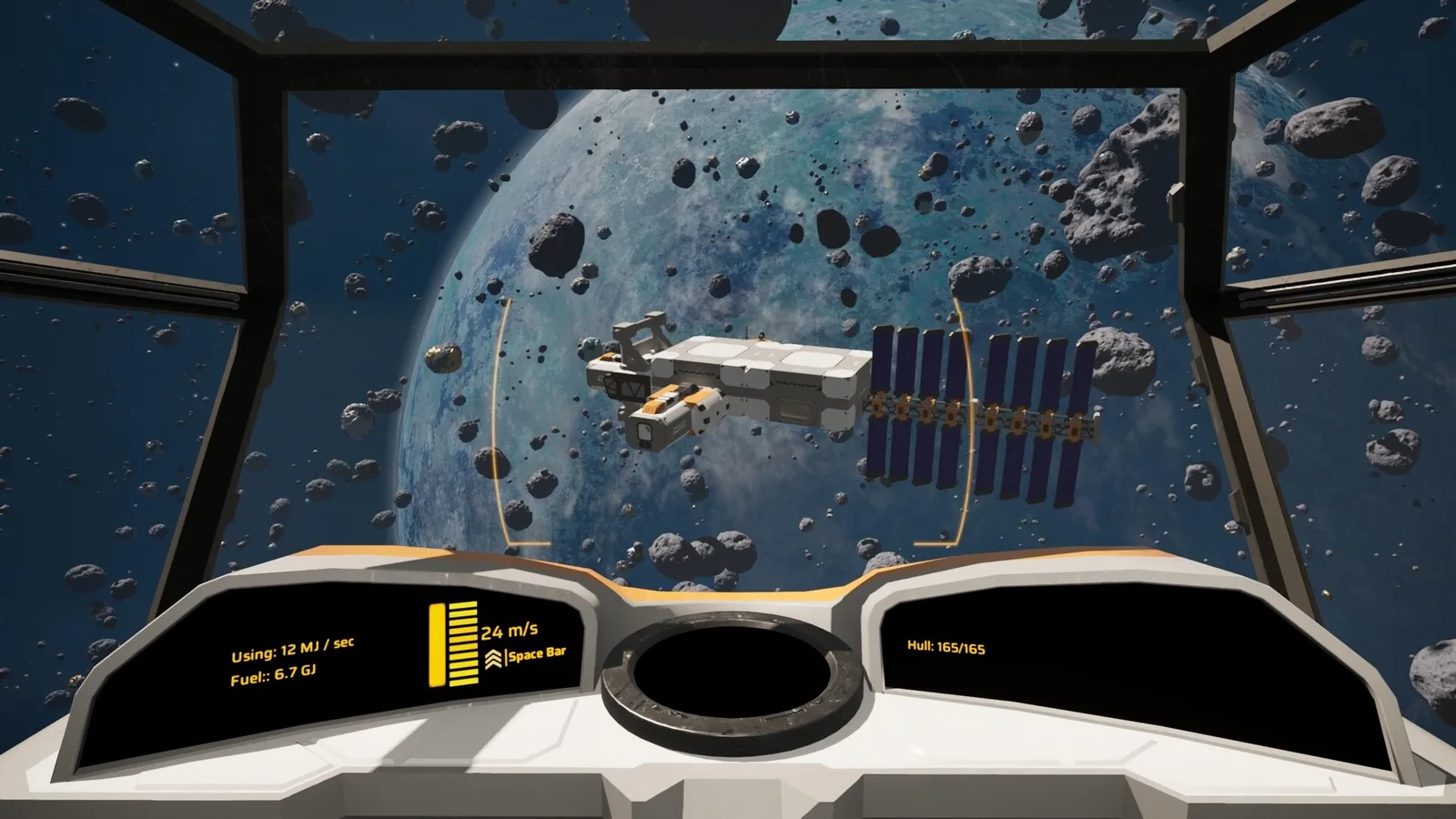
Scan the belt first, mine nickel and titanium, and build the Command Module before you chase automation.
The first ten minutes: scan, not fly
Your ship's scanner is the fastest way to avoid emptying a mining laser into a rock that contains nothing useful. Ping the field around you, then fly to the nearest signature with a resource readout rather than the biggest silhouette. Asteroid size is not a proxy for ore value.
Priorities for the opening belt:
| Resource | Why it matters first | Where it goes |
|---|---|---|
| Nickel | Magnetic Coils, Capacitors, Hull Plates | Refinery → Assembler |
| Titanium | Lightweight Frames | Refinery → Assembler |
| Silica | Silicon Wafers, Reinforced Glass | Refinery |
| Water Ice | Hydrogen Fuel for reactors | Refinery |
| Cobalt | Higher-tier refining, Detector Array | Refinery later |
Nickel and titanium are the two you will curse at midnight. Nickel feeds Magnetic Coils, and coils appear in thrusters, mining lasers, reactors, and almost every early module. Titanium feeds Lightweight Frames, which are the skeleton of your first station and your first shipyard. If a rock has either, strip it before you chase a prettier ore.
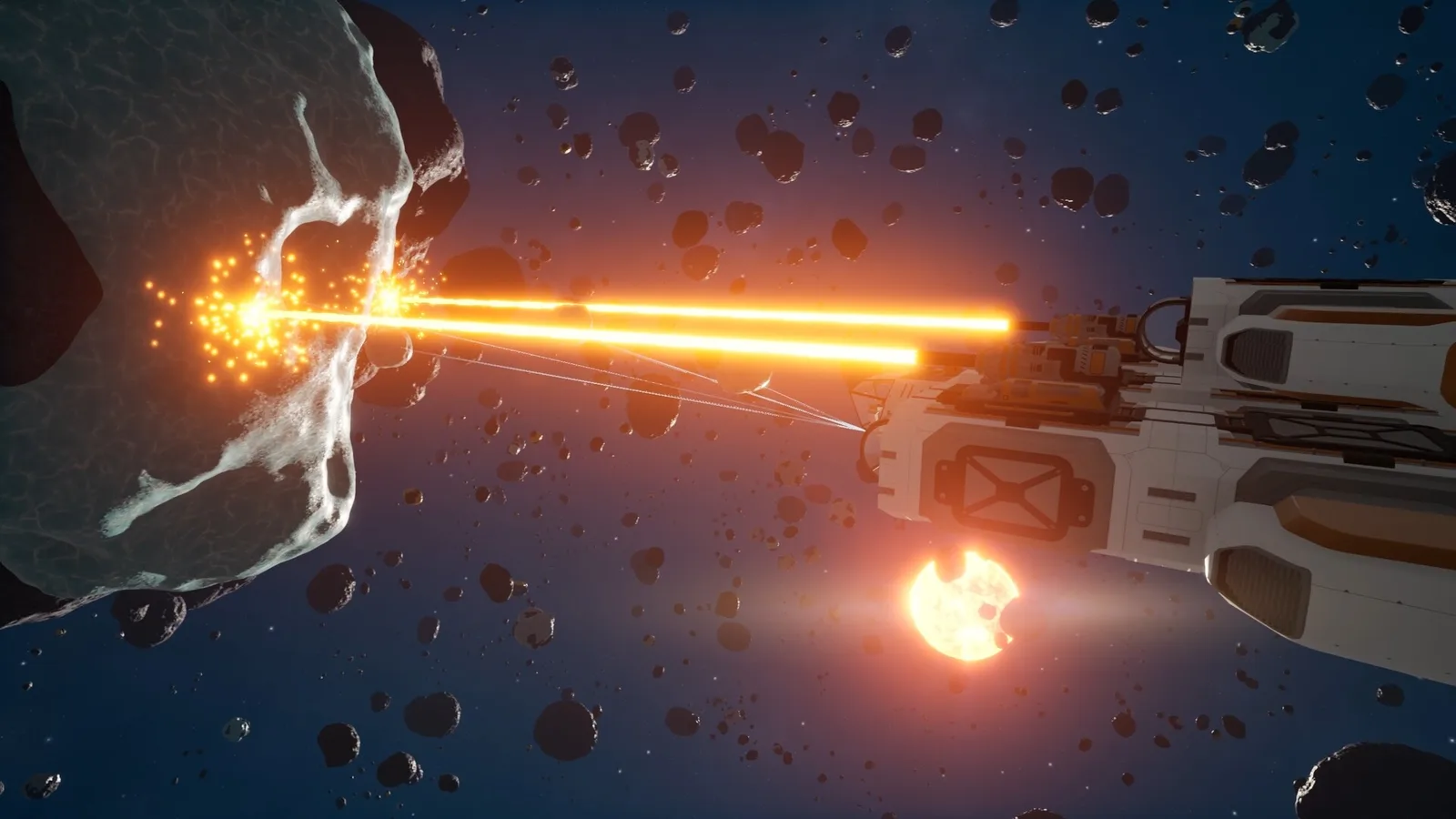
Your mining laser is short-range: 125 metres in the demo, with a 3 MW draw and 10 damage per second. That means you park close, hold the beam, and wait. The cockpit's tractor beam reaches 250 metres and saves a lot of drifting, so line up the fragment before you cut. Do not fly with the laser firing; the ship's power budget is not designed for that.
Cargo, refining, and the first real decision
The refinery is where Main Sequence stops being a flying game. It runs one recipe at a time, and the early conversions are deliberately simple: one unit of nickel, titanium, or cobalt ore becomes one plate; silica becomes silicon wafers or, in pairs, reinforced glass; water ice becomes hydrogen fuel.
That simplicity hides the first real decision. Do you refine ore in your ship and carry plates, or carry raw ore back to a station refinery? In the opening hour, refine in the ship if the ship has a refinery module, because a full ore hold is heavier than the plates it produces and you want the cargo compression. Once your station has its own refinery, the station should do the work while you mine, and your ship should carry only what the station cannot process yet.
A practical rule: never leave the belt with an empty refinery queue. If you are flying back anyway, queue the longest recipe you can afford. Refining is free time you are already paying for with travel.
The station is the save file
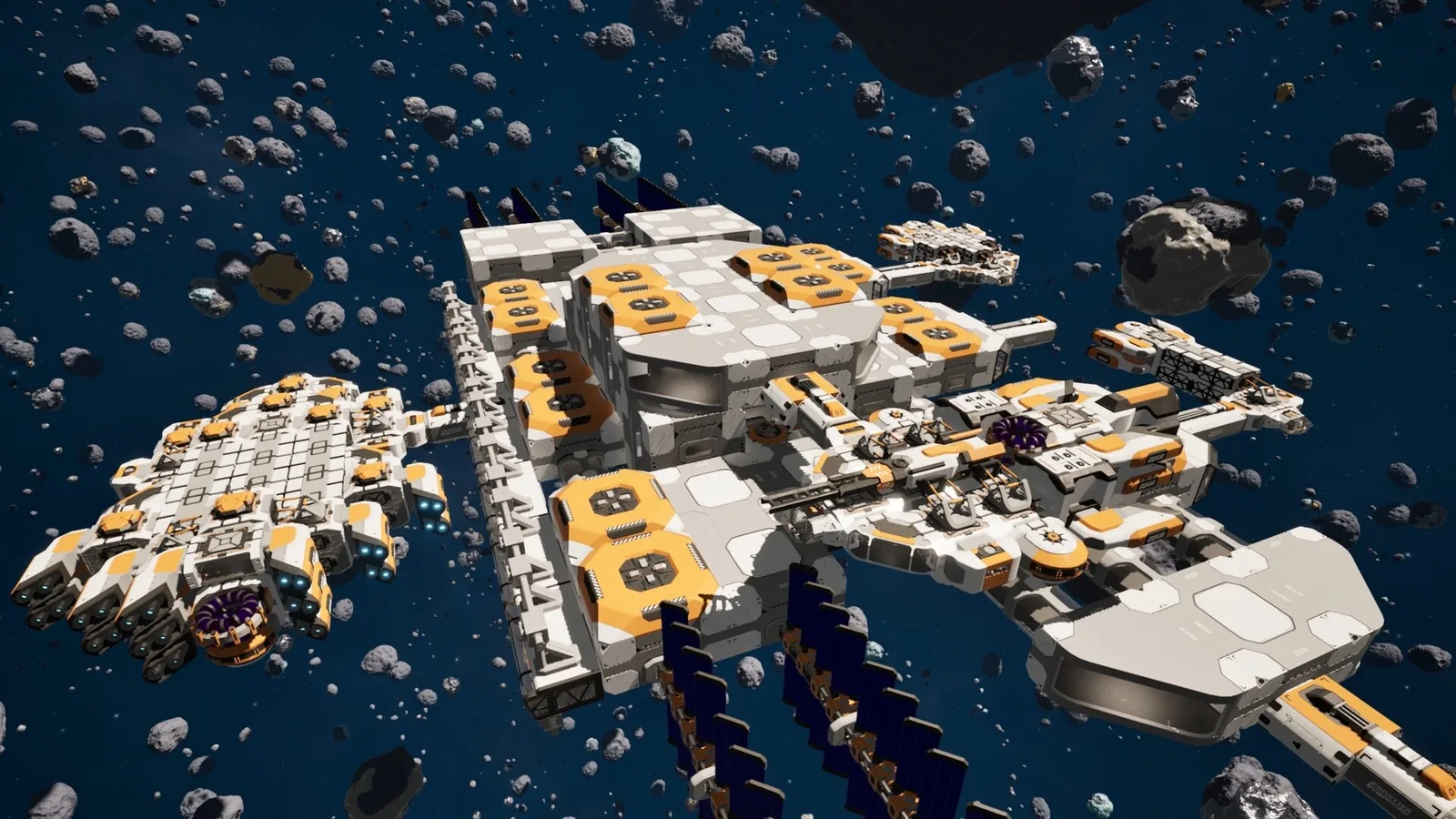
Your first station begins with a Command Module. In the demo it costs 5 Hull Plates and 10 Lightweight Frames, which is deliberately cheap: the game wants you to place it early. The Command Module contains the Design Console, the circular interior terminal that opens station building mode, and it is the anchor every later module must connect to.
Three rules govern station expansion, and breaking them is the most common reason a new base becomes a maze:
- Every new module must touch an existing module. You cannot start a detached wing and weld it on later.
- A container cannot be removed while it holds items. Empty it first, or you will be told the block is occupied.
- Power is not automatic. Solar panels and reactors have outputs, machines have draws, and the station reports an emergency-power state when demand exceeds supply. Build the generator before the production block, not after.
The first station should be small enough to understand:
- Command Module at the centre.
- One refinery and one assembler, adjacent, so belts are short.
- One solar panel or a reactor with fuel.
- One dock for your ship.
- One container for nickel/titanium plates and one for silica products.
That is a starter base, not a factory. Resist the urge to add a second production line before the first one runs without input from you.
Power before production
The demo's power numbers are generous but not infinite. A Solar Panel Mk.1 produces 12 MW and costs 20 Reinforced Glass, 20 Capacitors, and 5 Lightweight Frames. A station Reactor produces 48 MW and burns Hydrogen Fuel or Ice. Your refinery draws 4.5 MW, an assembler 6 MW, an advanced assembler 18 MW, and each science lab 12 MW.
The trap is the jump from one production block to three. A single solar panel covers a refinery and an assembler with room to spare. Two assemblers, a refinery, and a lab do not fit, and the station quietly slows everything down. Keep at least 30 percent headroom. If you are about to cross that line, add generation first.
Reactors are the better long-term answer because 48 MW in one block is dense, but they introduce a fuel chain: water ice → hydrogen fuel, or a dedicated ice run. Solar is simpler and has no fuel, which is why it belongs on the first station. Put reactors on the station that builds ships, where the 18 MW advanced assembler and the shipyard both live.
Research: spend output, not time
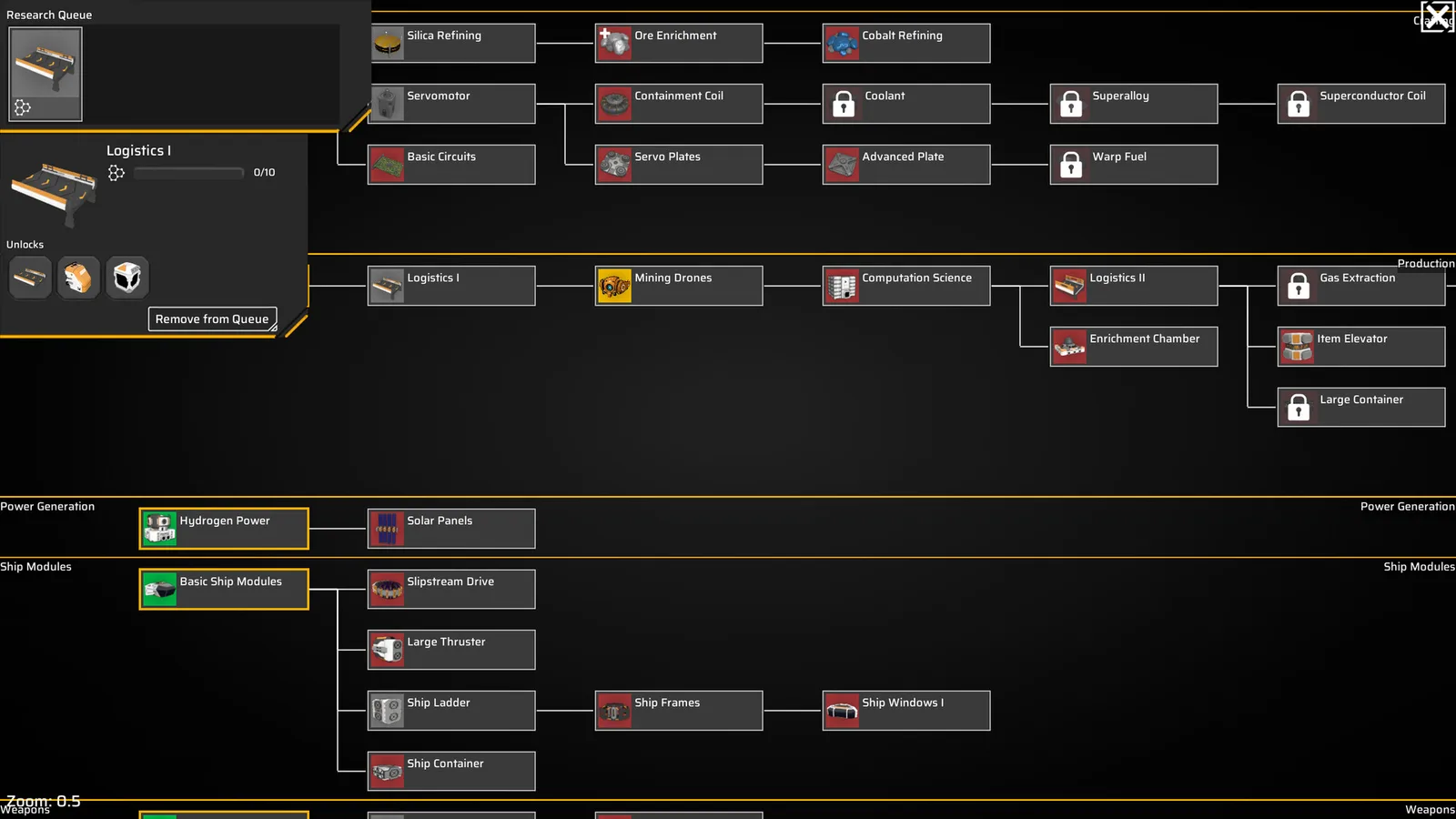
Research in Main Sequence is not a menu you click once. Labs consume science items produced by your factory, and the tech tree unlocks modules, recipes, and tiers. The first tier is free: Basic Crafting, Basic Production, Basic Refining, Basic Ship Modules, Basic Ship Weapons, Basic Station Modules, and Hydrogen Power cost nothing to start. Use that free tier to establish refining and power before you spend a single science item.
Then aim for the two gates that change the game:
- Basic Circuits (30 Material) unlocks the circuit line that feeds capacitors, detectors, and advanced modules.
- Logistics I (5 Material) unlocks Conveyor Belt Mk.1 and, with Mining Drones (15 Material), the Mining Drone Bay.
Computation Science (50 Material) is the next real wall. It unlocks the labs and recipes that lead to Slipstream Drive, which is the point where the map stops being one belt. Do not rush it at the cost of a stable nickel supply; the drive is useless if you cannot fuel the ship that carries it.
What to do in the first two hours
A clean opening looks like this:
- Scan the belt and mine nickel until the hold is full.
- Refine nickel into plates while you fly back.
- Mine titanium on the next trip; refine it into Lightweight Frames.
- Place the Command Module near the belt, not at a scenic coordinate.
- Add a refinery, an assembler, a solar panel, a dock, and two containers.
- Queue Basic Circuits and Logistics I.
- Build a Mining Drone Bay as soon as it unlocks; two drones at 1,000 metres do more for your throughput than a second laser.
- Only then expand the station footprint.
The most common beginner mistake is building a beautiful station with no power budget and no dock queue. The second most common is researching Slipstream before securing a second nickel source. The third is treating the mining laser as a weapon. It is a tool with a 125-metre range, and the game will punish you for pointing it at something that shoots back.
If you want the short version of the same advice, the tips guide→ condenses it into twelve rules.
FAQ
How long is the tutorial? There is no separate tutorial campaign. The mission list walks you through building a conveyor belt and a mining drone bay, but the real onboarding is your first station.
Can I move my station later? The demo lets you remove and rebuild modules, but there is no free relocation of a whole base. Choose a belt with nickel, titanium, and ice within reasonable flying distance.
Do I need a reactor early? No. Solar Mk.1 is enough for a refinery, an assembler, and a lab. Add a reactor when you build the shipyard block.
What should I research first? Basic Circuits, then Logistics I and Mining Drones. Computation Science after your nickel supply is stable.
Once the first station is stable, the Main Sequence station building guide→ covers expansion order and dock placement.
Official source: Main Sequence on Steam ↗ and the Steam news hub ↗.
Sources
- Main Sequence on Steam ↗ — store description, Early Access date, system requirements.
- Main Sequence Steam news hub ↗ — Next Fest demo update and 21 October hotfix notes.
- Main Sequence on the Epic Games Store ↗ — release date corroboration.
- Mythwright ↗ — publisher information.