
Main Sequence Power Guide: MW Budgets That Hold
Main Sequence power explained: solar and reactor output, real machine draw, fuel chains, ship power, and how to size a station before it browns out.
Power in Main Sequence is the quiet system. There is no sprawling cable network to build and no per-machine generator to place. The station has a total output, the machines have a total draw, and when draw exceeds output the base enters an emergency state and everything slows down.
That simplicity is a trap. A station can be fully built, fully belted, and still produce at half rate because one number is wrong. This guide gives you the numbers and a budgeting method that survives expansion.
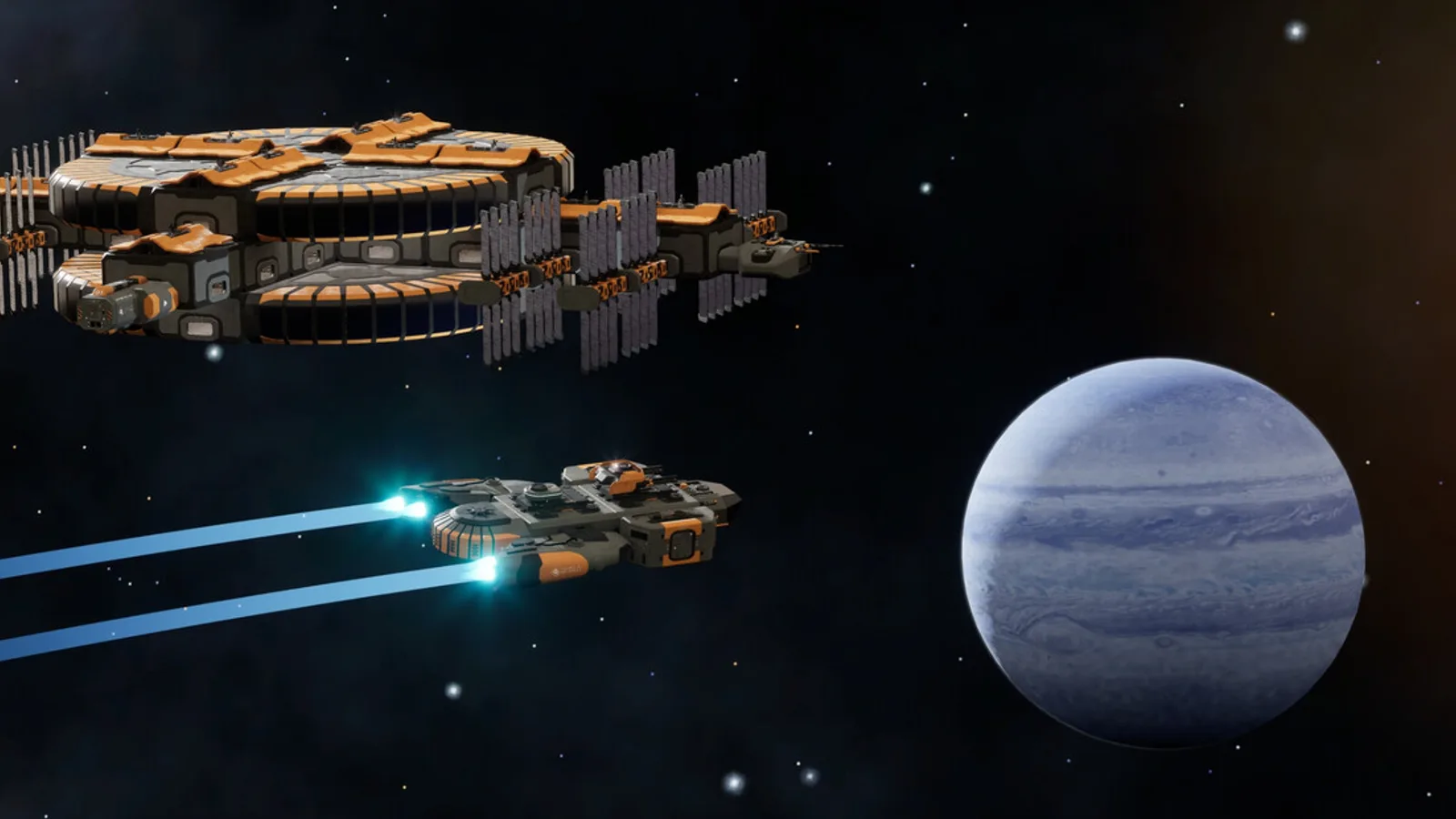
One solar panel Mk.1 gives 12 MW, so keep total draw under 8.4 MW per panel.
Generation: two real options
The demo has two station power sources worth using:
| Source | Output | Cost | Fuel |
|---|---|---|---|
| Solar Panel Mk.1 | 12 MW | 20 Reinforced Glass, 20 Capacitors, 5 Lightweight Frames | None |
| Solar Panel Mk.2 | 48 MW | 20 Detector Array, 20 Capacitors, 5 Lightweight Frames | None |
| Reactor | 48 MW | 5 Lightweight Frames, 10 Magnetic Coils | Ice or Hydrogen Fuel |
Solar Mk.3 is locked in the demo at 288 MW. The Mk.2 is the sweet spot for a mid-game station: 48 MW in one module, no fuel, and a cost that is mostly detectors and capacitors. The Reactor offers the same 48 MW for far fewer materials, but it adds a fuel chain that can stop.
For a first station, Solar Mk.1 is correct. For a shipyard or a large production hall, a Reactor or Solar Mk.2 is correct. Do not build a Reactor before you can supply it; a fuelless reactor is a 48 MW decoration.
Demand: the numbers that matter
| Machine | Draw |
|---|---|
| Refinery | 4.5 MW |
| Assembler | 6 MW |
| Advanced Assembler | 18 MW |
| Enrichment Chamber | 18 MW |
| Science Lab | 12 MW |
| Relic Analyzer | 12 MW |
| Workstation | 10.5 MW |
| Short-Range Teleporter | 12 MW |
| Trade Console | 6 MW |
| Mining Drone Bay Mk.1 | 6 MW |
| Mining Drone Bay Mk.2 | 12 MW |
Ship modules have their own draws, which we will cover below.
The pattern is that production machines are cheap and advanced machines are expensive. An advanced assembler at 18 MW is three basic assemblers' worth of power for one machine. A science lab at 12 MW is the same as two assemblers. This is why a station that ran fine on one solar panel suddenly fails when you add a lab and a drone bay.
The 30 percent rule
Size generation so that normal demand is at most 70 percent of output. The remaining 30 percent covers:
- Startup spikes when several machines begin a cycle together.
- A drone bay that draws while the refinery is running.
- The next machine you have not built yet.
A 12 MW solar panel therefore supports 8.4 MW of normal demand: one refinery (4.5 MW) plus one assembler (6 MW) is already 10.5 MW, which violates the rule. That is why the starter block should have two solar panels, not one. The second panel is not for the current load; it is for the load you are about to add.
The rule is a guideline, not a hard cap. If you are willing to accept slower production during peaks, you can run closer to 100 percent. But a factory game is a game of throughput, and a station at 95 percent load spends a lot of time in emergency mode.
The fuel chain
A Reactor burns Ice or Hydrogen Fuel. The refinery recipe is 2 Water Ice → 1 Hydrogen Fuel at 10 per minute, a 6-second cycle. That is a slow recipe relative to the reactor's appetite, so a reactor station needs either a dedicated ice refinery or a Gas Vent.
The clean setup:
- Gas Extractor on a Gas Vent, 60 per minute.
- Fuel storage container next to the reactor.
- A short belt from storage to reactor.
- A second container as a buffer, so a mining trip does not stop the reactor.
If you use ice instead of gas, put the ice refinery in the same hall as the reactor. Hydrogen fuel is the more compact fuel, but ice is easier to mine in bulk. Either works; the mistake is putting the fuel production on the far side of the station.
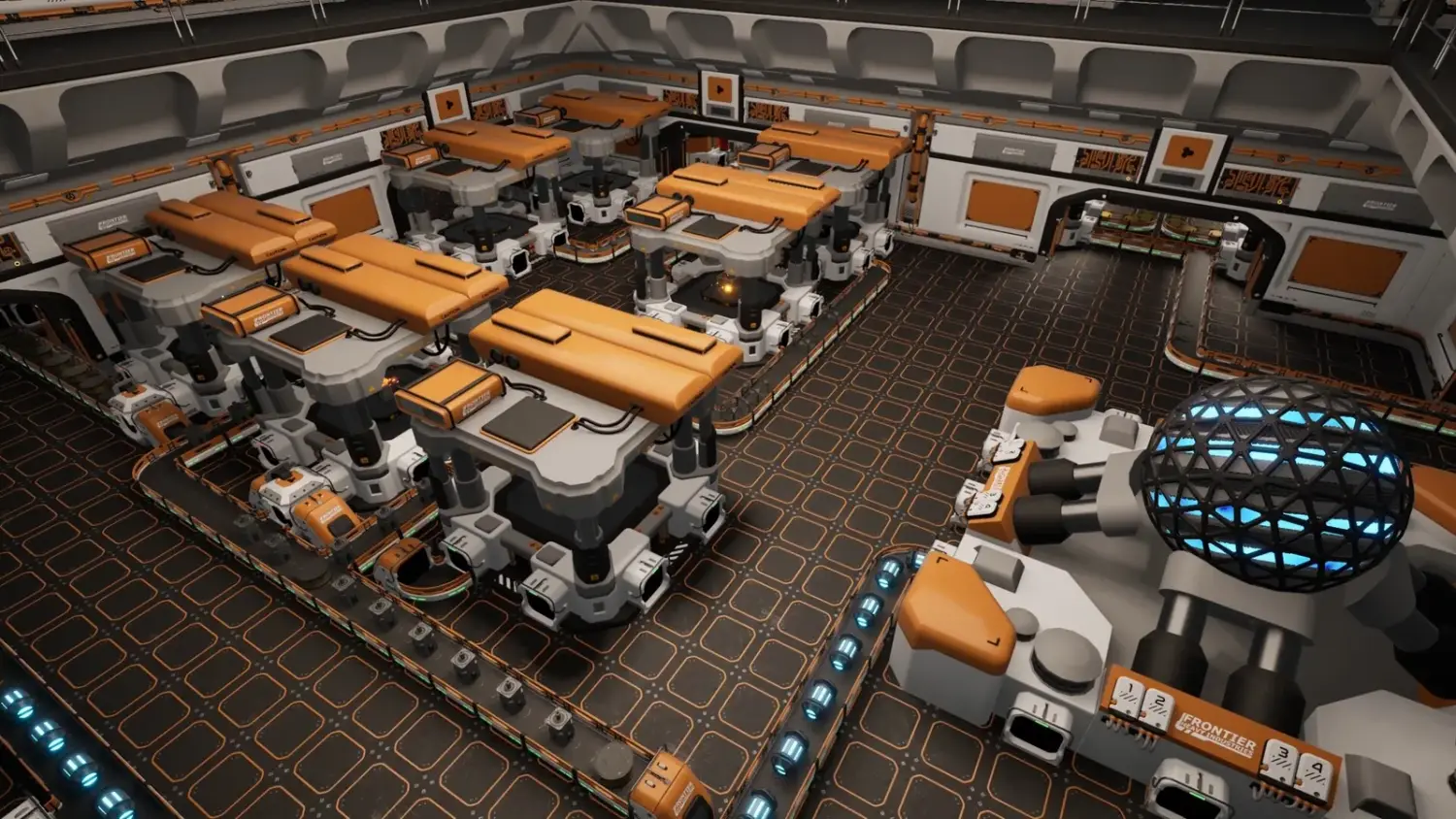
Ship power is a separate budget
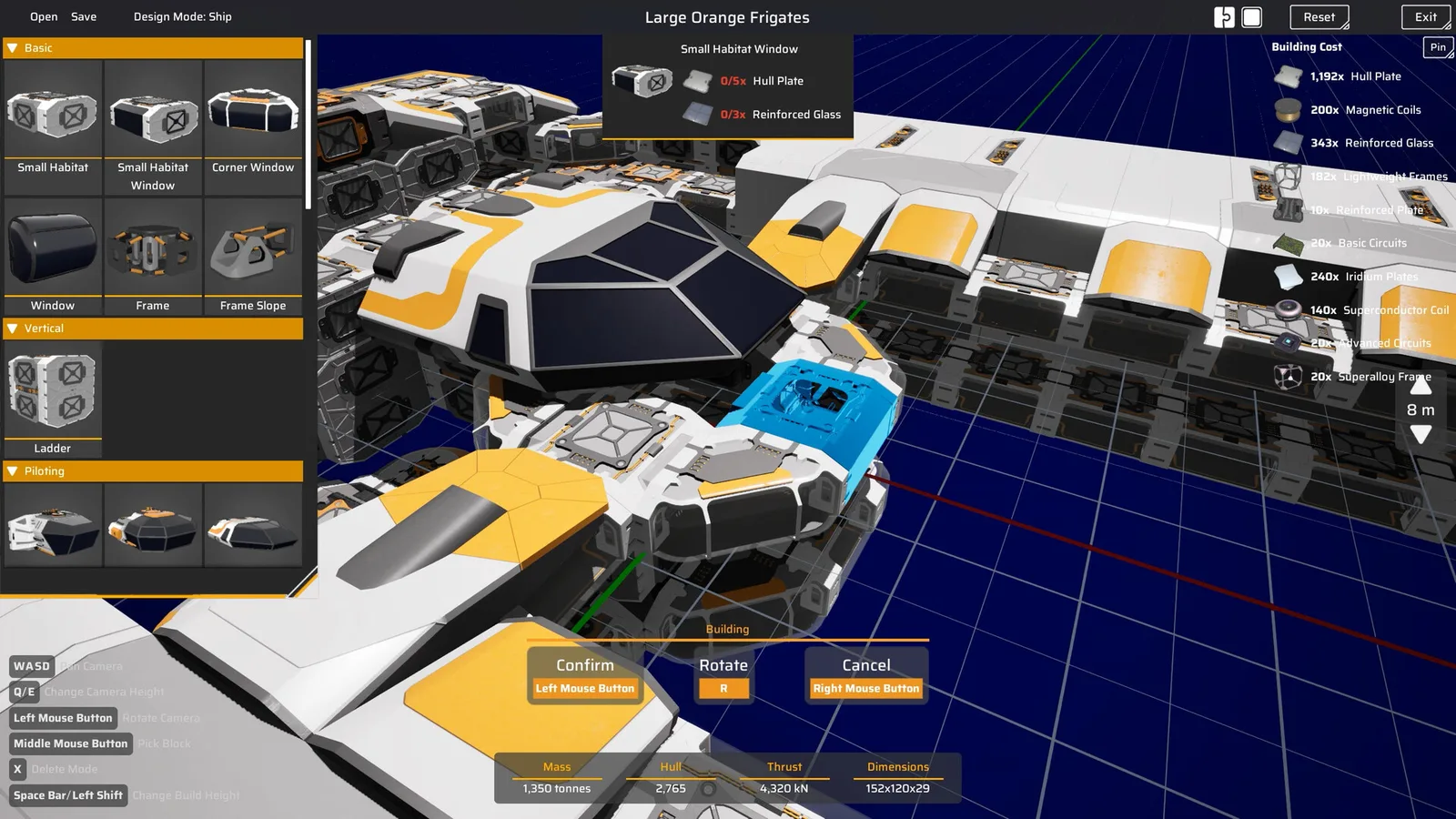
Ships do not share the station grid. A ship has its own reactor, and its weapons, shields, and thrusters draw from it. The demo's ship reactor options include a Small Reactor at 24 MW and larger reactors for bigger hulls.
The visible symptom of an undersized ship reactor is a ship that cannot fire and thrust at the same time. The fix is not more thrusters; it is a bigger reactor or fewer energy weapons. When you design a combat ship, add up the weapon draw before you add the armour:
- Plasma Cannon: 3 MW recharge, 2 MJ per shot.
- Plasma Lance: 7.5 MW recharge, 10 MJ per shot.
- Shield Generator Mk.1: 3 MW.
Four Plasma Lances alone are 30 MW of recharge, which exceeds a Small Reactor before thrusters. That is why the large combat hulls need large reactors. A mining ship with one laser and one thruster is fine on a Small Reactor; a warship is not.
Diagnosing a power problem
When production slows, check in this order:
- Station power bar. Is demand above output? If yes, add generation.
- Fuel. Is the reactor out of ice or hydrogen? If yes, fix the fuel belt before adding panels.
- Machine count. Did you add a lab or advanced assembler without generation?
- Ship reactor. Is the ship unable to fire while moving? That is a ship budget issue, not a station issue.
- Belt backlog. A full output belt can look like a power problem because machines stop. Check storage before you build another panel.
The emergency state is not a hard shutdown; it is a slowdown. That makes it easy to miss. If your factory feels sluggish but nothing is broken, power is the first suspect.
A power plan for each stage
| Stage | Generation | Typical load |
|---|---|---|
| Starter | 2× Solar Mk.1 (24 MW) | Refinery, assembler, drone bay |
| Automation | 4× Solar Mk.1 (48 MW) | Two refineries, two assemblers, lab |
| Industrial | 1× Reactor or Solar Mk.2 (48 MW) | Advanced assembler, enrichment, labs |
| Shipyard | 2× 48 MW sources | Shipyard, advanced assembler, defences |
Add the second 48 MW source before the shipyard, not after. Shipbuilding is power-hungry, and a shipyard that browns out during a build is a shipyard that wastes materials.
When the grid is stable, the research guide→ explains what to spend it on.
FAQ
How much power does a solar panel make? Mk.1 makes 12 MW, Mk.2 makes 48 MW, Mk.3 makes 288 MW but is locked in the demo.
How much does a reactor make? 48 MW, burning Ice or Hydrogen Fuel.
Why is my station in emergency power? Demand exceeds output, or the reactor has no fuel. Check both before adding machines.
How much headroom should I leave? About 30 percent. A 12 MW panel should carry no more than 8.4 MW of normal load.
Do ships use station power? No. Ships have their own reactors and their own budgets.
Official source: Main Sequence on Steam ↗ and the Steam news hub ↗.
Sources
- Main Sequence on Steam ↗ — power, station, and ship systems.
- Steam news: Next Fest demo update ↗ — demo module changes.
- Main Sequence on SteamDB ↗ — build reference.
- Mythwright ↗ — publisher.